
Why Hemp Selvedge Denim
The fabric comes first.
Before patternmaking, hardware, or branding, Commonwealth Denim began with a single objective: develop a true 100% hemp selvedge denim suitable for raw jeans. For more than 150 years, denim has been almost exclusively made from cotton. Hemp, despite its strength as a bast fiber, has rarely been woven into traditional denim, especially on shuttle looms.
Working with Tuscarora Mills in Pennsylvania, Commonwealth Denim spent more than two years developing a stable 12 oz hemp selvedge denim using wet-spun long-line hemp yarn sourced from Europe. The result is a raw denim fabric that behaves differently from cotton: strong, breathable, and capable of developing its own texture and character through wear.
Watch Below For The Inside Look at our Fabric Being Created at Tuscarora Mills, in Pennsylvania
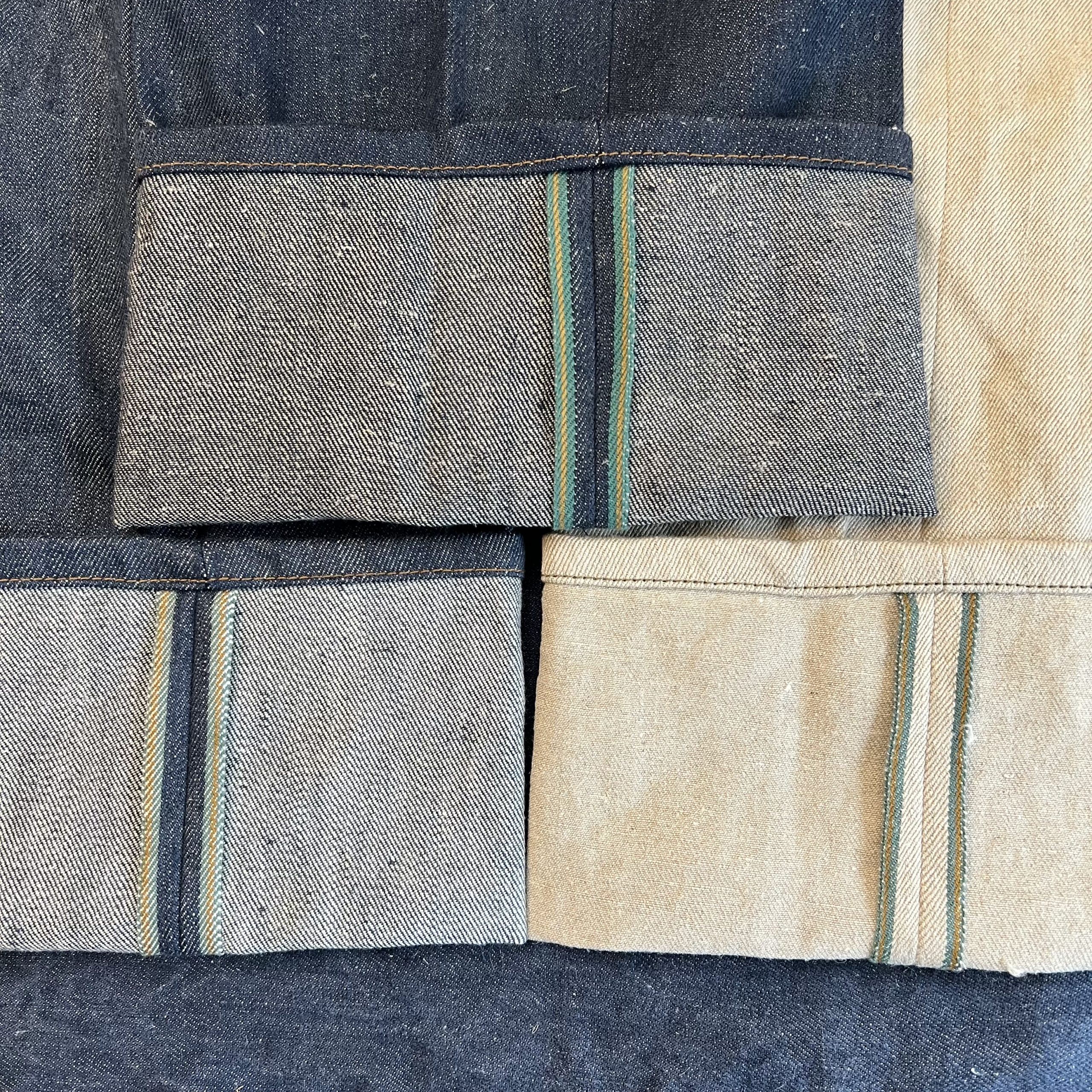
Fabric Specifications
Fabric: 12 oz Raw Selvedge Denim
Fiber: 100% Hemp
Yarn Type: Wet-spun long-line European hemp
Construction: Indigo, Black, and Natural warp / natural hemp weft
Weaving Method: Shuttle-loom selvedge
Loom: Draper X2 shuttle loom
Fabric Origin: Woven in Pennsylvania by Tuscarora Mills
Development: Two years of collaborative R&D between Commonwealth Denim and Tuscarora Mills
The Fiber and Yarn
This denim uses wet-spun long-line hemp yarn, not cottonized hemp.
Most hemp fabrics today rely on cottonized hemp, where the fiber is processed into shorter staple lengths so it can be spun on cotton systems. While this simplifies manufacturing, it removes much of hemp’s natural structure.
Wet spinning preserves the full length of the bast fibers, producing yarn with greater tensile strength and a more structured hand.
For raw denim enthusiasts, the difference becomes apparent over time as the fabric softens and develops character through wear.
Shuttle-Loom Selvedge Construction
The fabric is woven on Draper X2 shuttle looms operated by Tuscarora Mills in Pennsylvania.
Shuttle looms weave fabric by passing a single weft yarn back and forth across the loom, creating the finished edge known as selvedge. This self-finished edge prevents the fabric from unraveling and has become a hallmark of heritage-quality denim.
Unlike modern projectile or rapier looms designed for high-speed production, shuttle looms operate more slowly and allow greater control over the structure and tension of the fabric.
The result is a tightly woven denim with the distinctive selvedge edge associated with traditional denim manufacturing.
Why This Denim Costs What It Does
Premium denim pricing is not driven by branding, it is driven by fabric, machinery, and production scale.
The Commonwealth Denim fabric requires several conditions that significantly limit how much of it can be produced.
Specialized Hemp Yarn
This denim uses wet-spun long-line hemp yarn sourced from Europe, rather than cottonized hemp.
Wet spinning preserves the full length of the hemp fibers, producing stronger and more structured yarn. However, this process is significantly more complex than spinning conventional cotton yarn.
The result is a yarn that retains the natural strength and structure of hemp — but it also means fewer mills are capable of producing it.
Shuttle-Loom Selvedge Weaving
The fabric is woven on Draper X2 shuttle looms operated by Tuscarora Mills in Pennsylvania.
Shuttle looms weave fabric by passing a single weft yarn back and forth across the loom, producing the finished selvedge edge associated with heritage denim.
Unlike modern projectile looms that prioritize speed, shuttle looms prioritize fabric structure and control.
Because these looms operate significantly more slowly, they produce far less fabric in a given day.
Small-Batch American Production
Unlike mass-market denim, this fabric is produced in small batches using specialized equipment.
The combination of wet-spun hemp yarn and shuttle-loom weaving naturally limits production volume.
Production runs are constrained by the capacity of the looms producing the fabric, which means each batch must be woven slowly and deliberately rather than at industrial scale.
The Result
A pair of Commonwealth Denim jeans represents:
- 100% hemp selvedge denim
• wet-spun long-line hemp yarn
• American shuttle-loom weaving
• more than two years of fabric development
The price reflects the material, machinery, and time required to produce the fabric itself.